
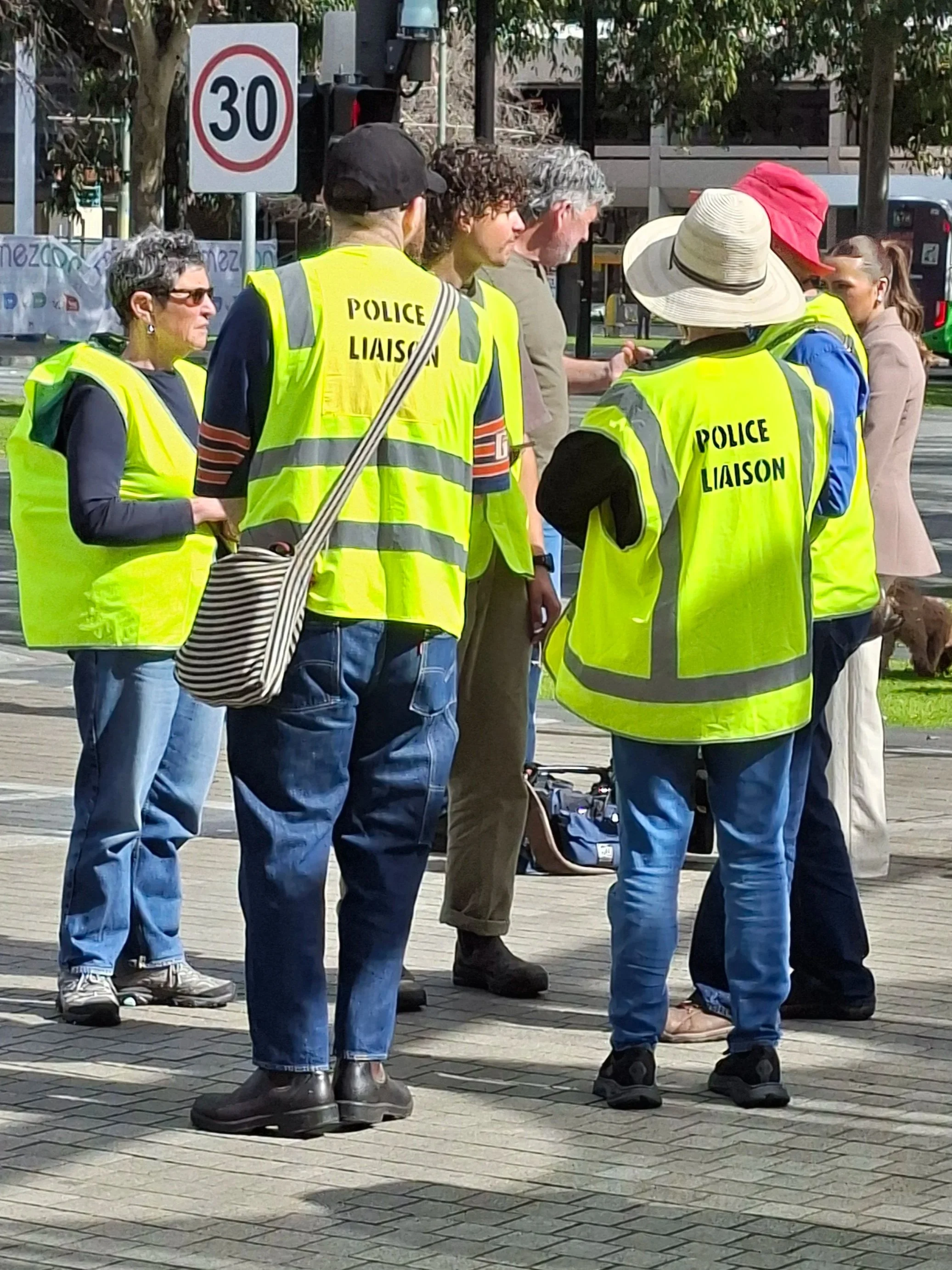
Police Liaison
Police Liaisons are helpful in building the movement of non-violent direct action in SA. Having Police Liaison (PL) at a protest helps activists to stick with an action plan and goals and create an atmosphere of confidence and security.
Police are enforcing the rules and decisions of the state. They are also people with their own concerns about their jobs and about the climate crisis. Working closely with the police improves our chances of them looking after our safety.
What Police Liaisons Do
The job is to create the best possible communication between SAPOL and protestors to support safe and successful completion of actions, especially if there is a risk of arrest.
PL work closely with organisers before actions or events. During an action they pass on any important information between SAPOL and action organisers.
Continual contact helps to de-escalate tension and PL always work in pairs to help them to remain calm especially if/when tensions get high.
One of the PL team is responsible for recording the process and the pair collaborate on writing a report to help evaluate the action and build the general knowledge base about SAPOL people and actions.
During a protest, PL do not:
Make or facilitate group decisions or take a protest role. That makes their job harder and may even lead to their arrest.
Actively help the police do their job.
Activists are asked to avoid conversations with SAPOL onsite and to direct all SAPOL queries to the PL onsite. This avoids any confusion and any sharing of important information.
Become a Police Liaison
The role of police liaison can be quite confronting and training is available and essential. Useful first steps are:
Do some marshalling first so that you have some experience of how actions can run AND you know many of the participants.
Try being a PL Buddy. It’s a great way to learn from the lead PL, to find out about your own strengths and what might make it hard for you.
Think about your early experience with police. If you believe they are there to keep us safe you might tend to obey police instruction without thinking it through. If you’ve had a bad experience with police you might struggle to relate to them as individuals and act respectfully and calmly.
Ask protest organisers about opportunities to join their Police Liaison team or send us your details HERE.
Request a Police Liaison Team
We consider fielding Police Liaison Teams upon invitation, and according to our volunteer capacity. We work across diverse movements, campaigns, and protest events, and we need to prioritise our resources and capacity. When we need to choose, we tend to focus on protecting the political space of groups that are experiencing or resisting structural or systemic oppression; or are more likely to be targeted by police or state repression.
To request Police Liaisons at your event, please click on the button in the navigation bar and fill out the Request Action Support form (information goes to a secure email address).